
Close Menu

    Subscribe to Updates

    Get the latest creative news from FooBar about art, design and business.

    What's Hot

    Disabling and Uninstalling Windows Updates

    October 15, 2025

    DDoS Defense Software for Windows Servers

    October 7, 2025

    Sandbox Explained: Your Secure Digital Playground

    October 7, 2025
    Facebook X (Twitter) Instagram
    • Tech
    • Gadgets
    Facebook X (Twitter) Instagram
    mgcourses.shop
    Subscribe
    • Home
    • Categories
      • Windows
      • Server
      • PC Security
    • Blogs
      1. Tech
      2. Gadgets
      3. Insights
      4. View All

      Disabling and Uninstalling Windows Updates

      October 15, 2025

      DDoS Defense Software for Windows Servers

      October 7, 2025

      Sandbox Explained: Your Secure Digital Playground

      October 7, 2025

      The Ultimate Guide to Installing Software with a WinGet GUI (UniGetUI)

      October 2, 2025
    • Contact
    • Our Authors
    • Privacy Policy
    mgcourses.shop
    Home»Tech»Windows»Disabling and Uninstalling Windows Updates
    Windows

    Disabling and Uninstalling Windows Updates

    AdminBy AdminOctober 15, 2025Updated:October 15, 2025No Comments2 Mins Read
    WhatsApp Pinterest Twitter Facebook LinkedIn Tumblr Email
    Share
    WhatsApp Twitter Facebook Pinterest LinkedIn Email

    A.Permanently Disable Windows Update (Until You Re-enables It)

    1. Using Group Policy Editor (Windows Pro/Enterprise Only)

    This method provides more granular control and is often more persistent, but it’s only available on Pro and Enterprise versions of Windows.

    1. Press Windows Key + R, type gpedit.msc, and press Enter.

    2. Navigate to Computer Configuration → Administrative Templates → Windows Components → Windows Update → Manage end user experience.

    3. Find and double-click the policy named Configure Automatic Updates.
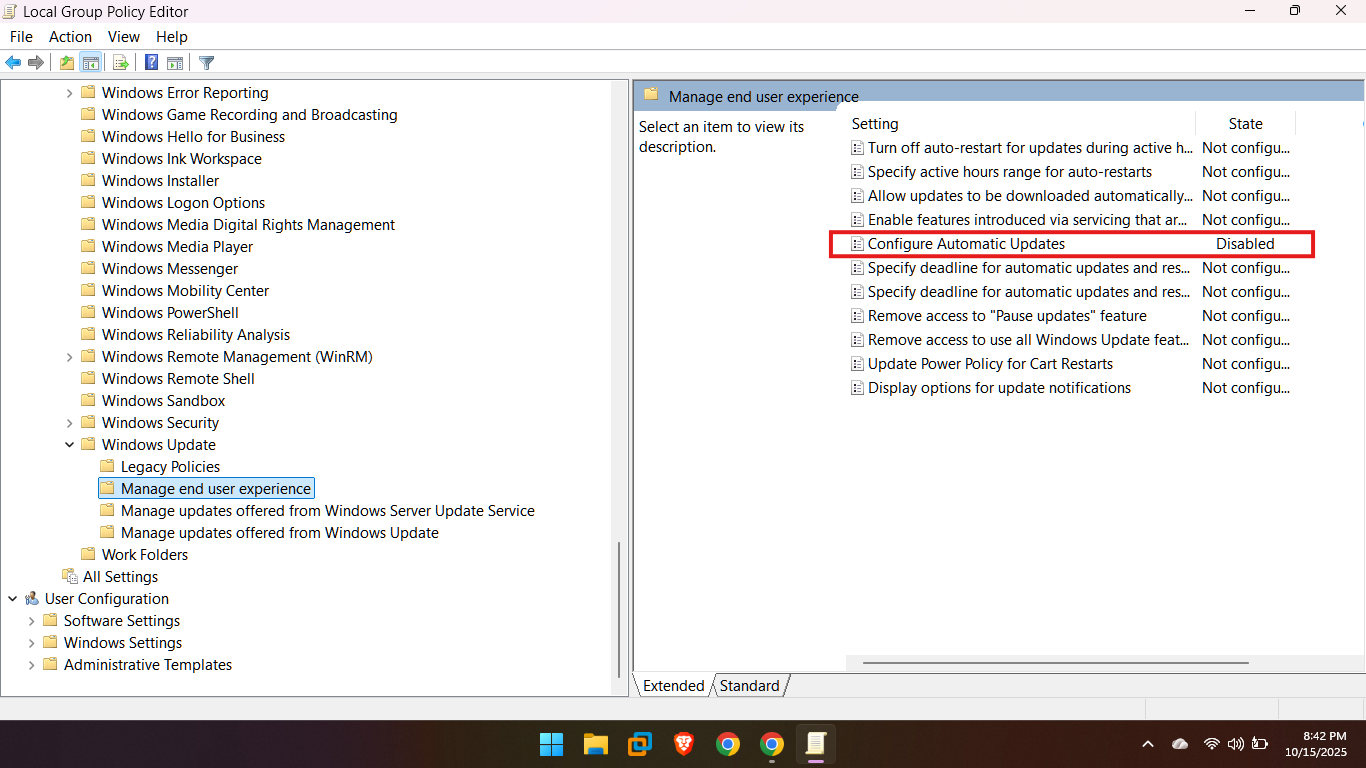
    In the configuration window, select Disabled.
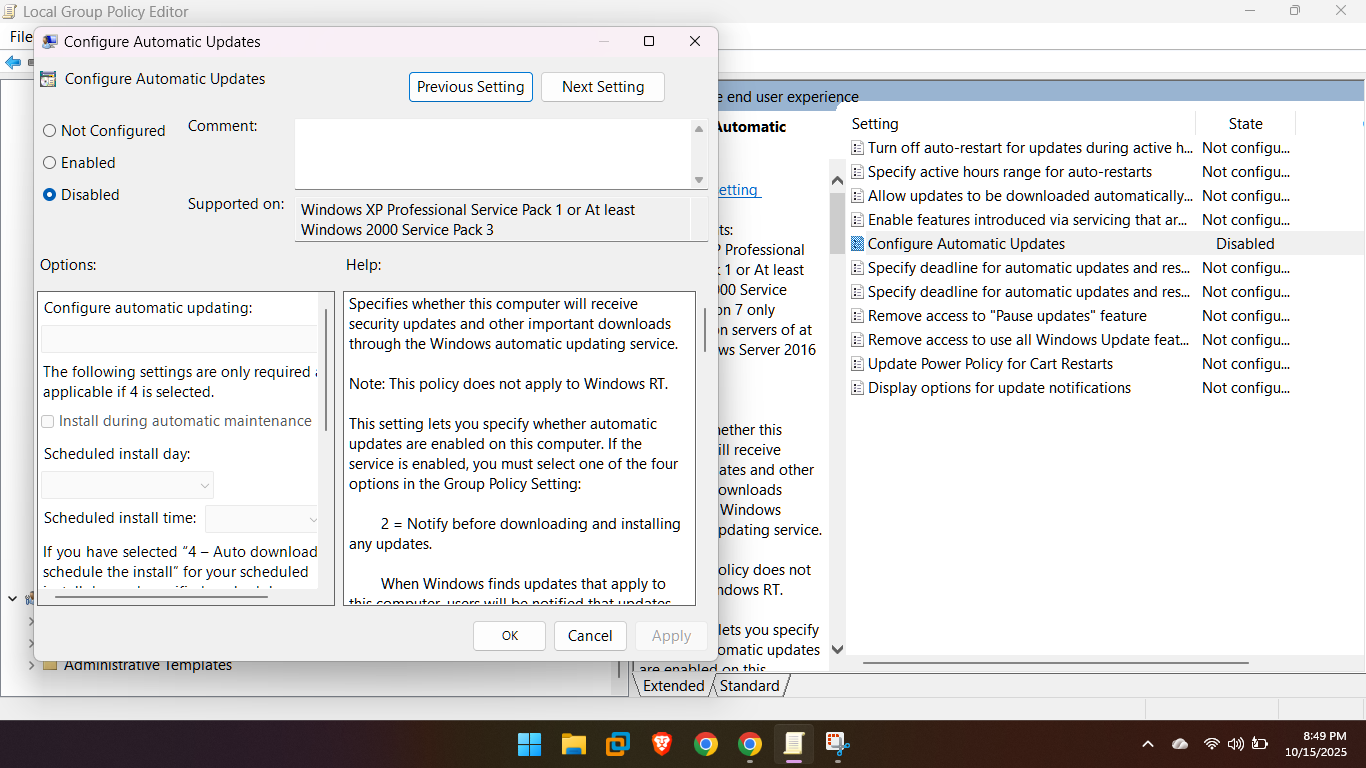
    Click Apply, then OK.

    Restart your computer to apply the policy change.

    2. Through Windows Services (Most Common Method)

    1. Press Windows Key + R, type services.msc, and press Enter.

    2. In the Services window, scroll down and locate the Windows Update service.

    3. Right-click on it and select Properties.

    4. Under the General tab, change the Startup type to Disabled.
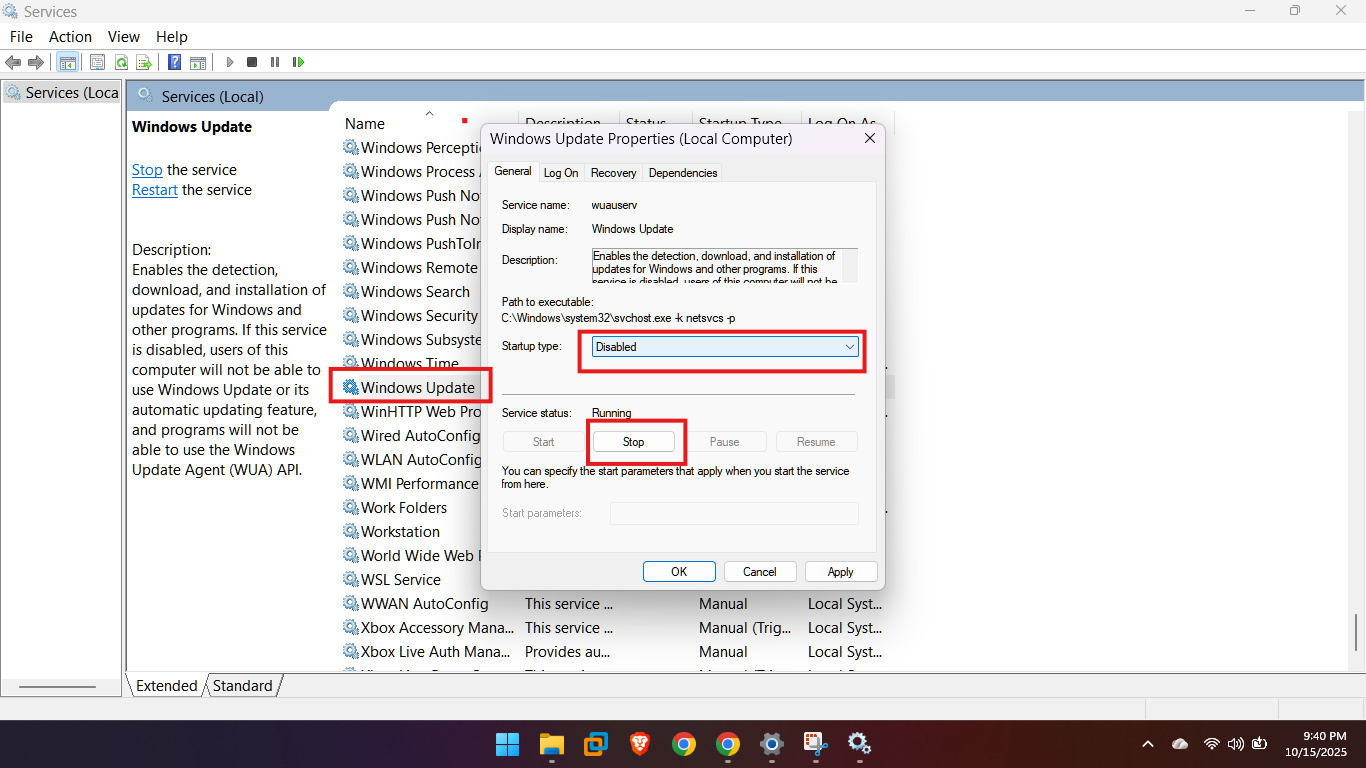
    5. If the service status is “Running,” click the Stop button.

    6. Click Apply, then OK.

    7. Restart your computer for the changes to take full effect.

    B. How to Uninstall the Latest One-Week Update

    If a recent update has introduced bugs or compatibility issues, you can usually uninstall it from the Control Panel or Settings, though some updates (like security patches) cannot be removed.

    1. Go to Settings (Windows Key + I).

    2. Click Update & Security (or Windows Update in Windows 11).

    3. Click View update history (or Update history).
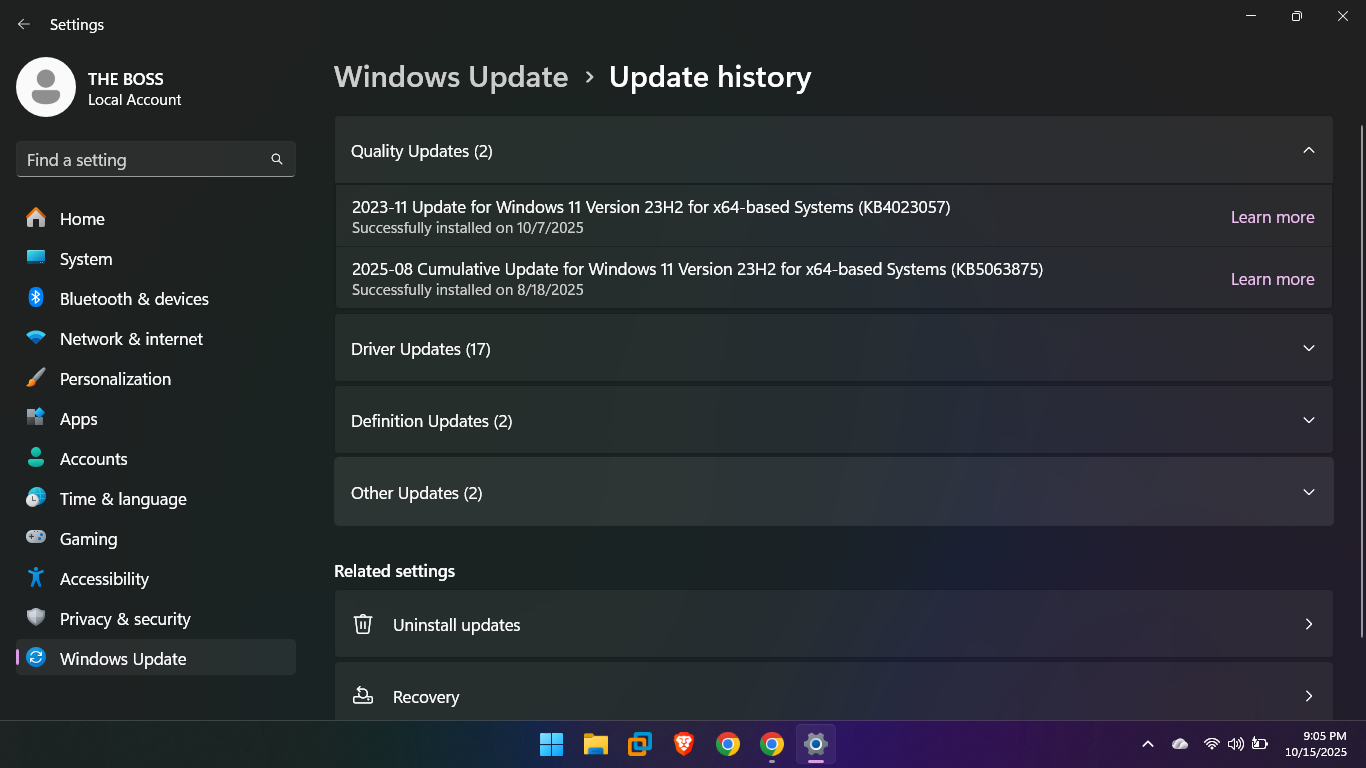
    4. On the next screen, click Uninstall updates at the top. This opens the Control Panel list of installed updates.
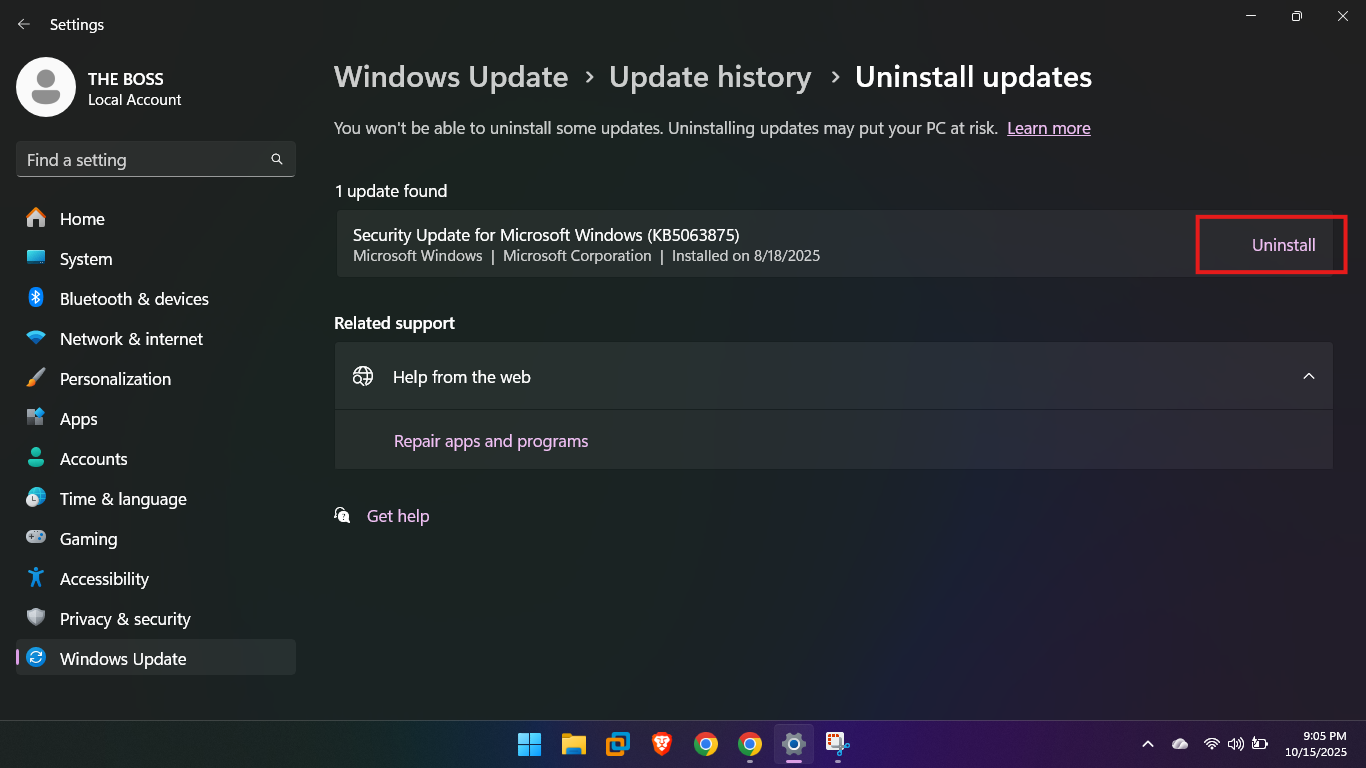
    5. The updates are usually listed with an installation date. Look for the update installed within the last week (typically a KBXXXXXXX number under the “Microsoft Windows” section).

    6. Click the problematic update to select it, and then click Uninstall at the top of the list.

    7. Follow the prompts to complete the uninstallation, which will likely require a restart.

    Share. WhatsApp Pinterest Twitter Facebook LinkedIn Tumblr Email
    Admin
    • Website

    Related Posts

    Sandbox Explained: Your Secure Digital Playground

    October 7, 2025

    The Ultimate Guide to Installing Software with a WinGet GUI (UniGetUI)

    October 2, 2025

    How to download Windows 10 without Windows Media Creation Tool

    September 24, 2025
    Add A Comment
    Leave A Reply Cancel Reply

    Editors Picks
    Top Reviews
    Facebook X (Twitter) Instagram Pinterest YouTube
    • Home
    • Tech
    • Gadgets
    • Mobiles
    • Contact
    • Privacy Policy
    © 2026 MGCourses. Designed by MGCourses.

    Type above and press Enter to search. Press Esc to cancel.